How to Select the Right Industrial Control Valves for Your Applications?
Selecting the right Industrial Control Valves is crucial for efficient operations across various industries. According to a report by MarketsandMarkets, the global industrial valve market is projected to reach $85 billion by 2027, indicating significant growth. Proper selection impacts system performance, energy consumption, and operational safety.
Expert insights highlight the complexities involved in choosing Industrial Control Valves. Dr. Emily Choi, a renowned authority in fluid dynamics, states, "The right valve choice can enhance system efficiency dramatically." This emphasizes the necessity for careful evaluation of valve types, sizes, and materials to meet specific application needs. Key factors include pressure ratings, temperature limits, and fluid compatibility.
Despite the available guidelines, mistakes are common. Often, engineers focus solely on cost rather than long-term benefits. This can lead to inefficient systems and increased maintenance costs. It's vital to weigh all aspects before making a decision. Proper research and expert consultation can mitigate these risks and lead to more reliable and efficient systems in the long run.
Understanding the Basics of Industrial Control Valves
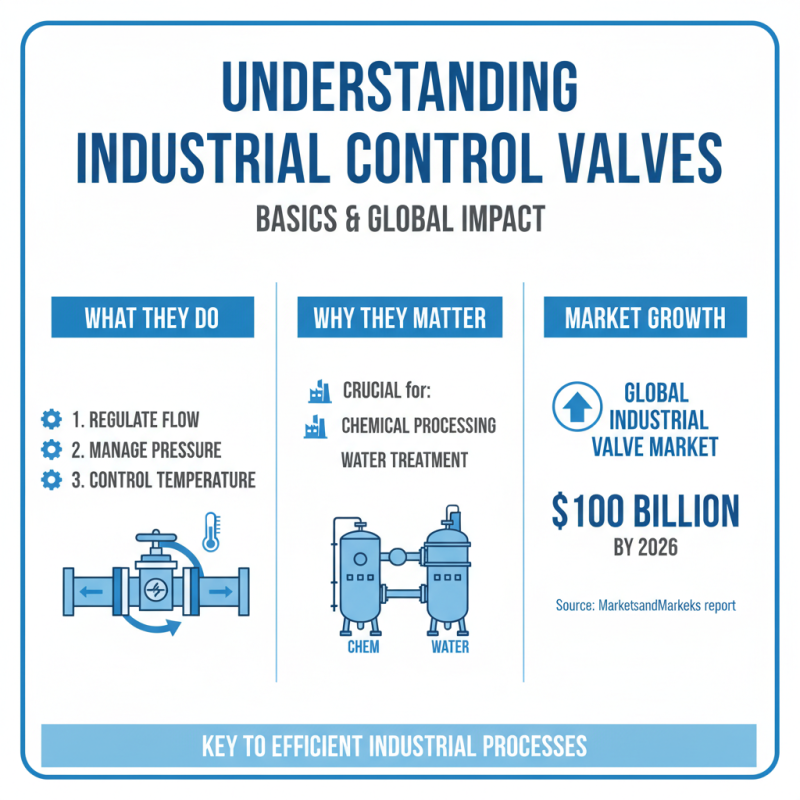
Industrial control valves are crucial for regulating flow, pressure, and temperature in various applications. Understanding their basics is key to effective selection. These valves control fluid dynamics in systems ranging from chemical processing to water treatment. According to a recent report by MarketsandMarkets, the global industrial valve market is expected to reach $100 billion by 2026, underlining their significance in industry.
When selecting valves, consider factors such as fluid characteristics. Different materials respond differently under varying conditions. For instance, corrosive fluids require materials like stainless steel or specialized alloys. Additionally, the flow coefficient (Cv value) indicates how well a valve can control the fluid flow. An improper Cv can lead to inefficiencies and increased energy costs.
Size is another critical factor. Oversized valves can result in lower precision, while undersized options may restrict flow and cause pressure drops. Pressure ratings ensure the valve can handle system demands. Always contemplate the trade-off between cost and performance; a more expensive valve might offer longevity and efficiency. Selecting the right industrial control valves entails careful consideration of these variables to avoid costly mistakes.
Types of Industrial Control Valves and Their Applications
Industrial control valves play a critical role in various sectors, including oil and gas, water treatment, and manufacturing. Choosing the right type of valve can significantly impact system efficiency and safety. The most common types include globe, ball, and butterfly valves. Globe valves are ideal for precise flow regulation. In contrast, ball valves offer quick shutoff capabilities. According to a recent market report from Research Dive, the industrial valve market is projected to reach $89.9 billion by 2026, driven by the growing demand in automation and process industries.
Each valve type has specific applications. For example, butterfly valves are highly effective in handling large volumes of fluid. They are often used in water treatment plants. However, they may not provide the best sealing compared to other types. On the other hand, ball valves excel in high-pressure environments, but they can suffer from wear if not properly maintained. Understanding these nuances is essential for system designers and operators. Even experienced professionals can overlook critical details, leading to costly errors or valve failure.
When selecting valves, consider the medium, pressure, and temperature requirements. Also, think about the expected lifespan and maintenance needs. Documentation and reliability studies from industry experts offer valuable insights into these considerations. Many systems fail due to improper valve selection or installation. Research indicates that nearly 30% of industrial failures can be traced back to valve issues. Prioritizing careful evaluation can prevent such setbacks and enhance operational efficiencies.
Types of Industrial Control Valves and Their Applications
Key Factors to Consider When Selecting Control Valves
Selecting the right industrial control valves requires careful consideration of several key factors. The first is the valve type. Ball, globe, and butterfly valves each have unique characteristics that suit different applications. The flow characteristics and pressure drops must align with system needs. Understanding your specific requirements improves long-term performance.
Next, consider the materials of construction. This choice impacts the valve's durability and compatibility with the media being controlled. Corrosion resistance and temperature tolerance are crucial. Materials must withstand not only the pressure but also the ambient conditions.
Actuation type is another vital factor. Manual, electric, or pneumatic actuators offer different benefits. Think about the operational efficiency and ease of maintenance. Automation trends might push toward electric actuators, yet they can introduce complexity in some environments. Reflect on the balance between automation needs and simplicity.
Finally, don’t overlook the importance of sizing. Incorrectly sized valves can lead to inefficiencies. Insufficient flow or excessive turbulence may occur, affecting system performance. An accurate assessment reduces the chance of costly mistakes. Engaging with experienced professionals can provide invaluable insights and ensure the right choices are made.
How to Select the Right Industrial Control Valves for Your Applications? - Key Factors to Consider When Selecting Control Valves
| Key Factor |
Description |
Importance Level |
| Fluid Type |
Identify the type of fluid (liquid, gas, slurry) to determine valve compatibility. |
High |
| Flow Characteristics |
Consider the flow characteristics such as laminar or turbulent flow for optimal valve design. |
Medium |
| Pressure and Temperature |
Evaluate working pressure and temperature ranges to select appropriate materials. |
High |
| Valve Size |
Determine the correct valve size based on the pipeline dimensions and required flow rate. |
Medium |
| Control Type |
Decide between manual, electric, pneumatic, or hydraulic control based on application requirements. |
High |
| Material Compatibility |
Select materials that resist corrosion and wear based on the fluid's chemical properties. |
High |
| Installation Space |
Assess available space for installation to choose a valve that fits easily. |
Medium |
| Budget Constraints |
Consider the total cost including purchase price, installation, and maintenance. |
Medium |
Common Industries and Their Specific Valve Requirements
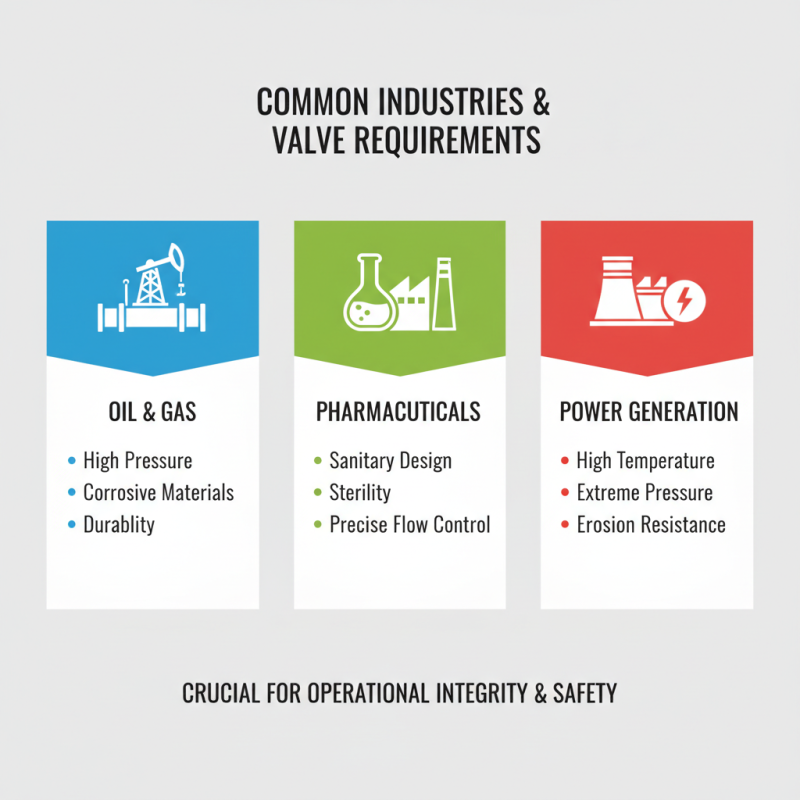
In various industries, the selection of control valves is crucial. Each sector has unique needs. For instance, the oil and gas industry demands valves that can withstand high pressures and corrosive materials. A meticulous analysis of the environment is needed to ensure long-term durability.
The food processing sector requires sanitary valves. These need to prevent contamination and be easy to clean. Valves here often must meet specific regulatory standards, adding to the complexity of selection. It's vital to assess both functionality and compliance with health regulations.
In chemical manufacturing, the focus is on material compatibility. Valves may require features like specialized seals. The challenge is to balance efficiency with safety. Adapting to evolving industry standards can lead to necessary design revisions. Continuous reflection on valve performance in real-world applications often reveals gaps or areas for improvement. Ultimately, understanding specific industry requirements enhances the selection process.
Maintenance and Troubleshooting for Industrial Control Valves
Maintaining industrial control valves is essential for optimal performance. Regular inspections can identify wear and tear. Intense environments may cause sealing issues. Keeping track of these problems can save time and resources.
Troubleshooting is a critical aspect of valve maintenance. When a valve fails to operate correctly, it can disrupt entire systems. Check for sticking or leakage as these are common signs. Damaged components may require replacement. Regular testing and calibration are necessary to ensure accuracy. It’s vital to document all maintenance activities for future reference.
Even with the best care, issues may arise unexpectedly. Operators often overlook small signs of malfunction. A proactive approach helps prevent larger failures. Engaging in regular training can enhance staff awareness. Continuous learning fosters a culture of safety and reliability within the team. A focus on these practices leads to smoother operations and fewer disruptions.