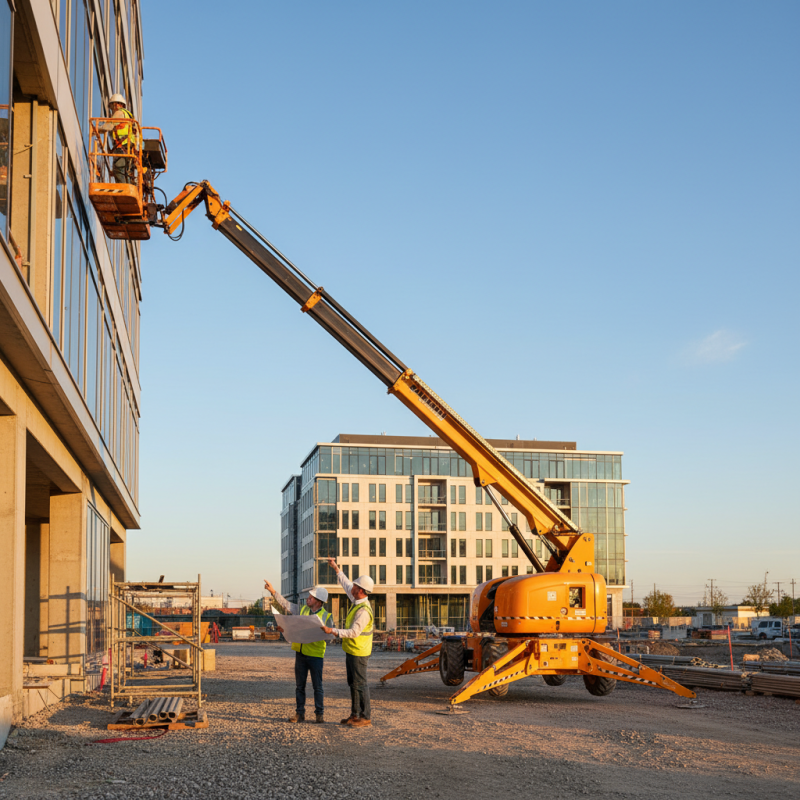
How to Choose the Right Towable Boom Lift for Your Project?
Choosing the right Towable Boom Lift for your project can be challenging. Many factors come into play when making this decision. You need to assess your project requirements carefully.
Towable Boom Lifts offer versatility for various tasks. They are easy to transport and can access hard-to-reach places. However, each model has unique specifications. Not every boom lift is suitable for every job. For example, consider the lift height and weight capacity needed.
Proper selection can improve efficiency and safety. Ignoring details might lead to operational issues. For instance, an inadequately sized boom lift could complicate your work. Reflecting on the specifics of your project ensures successful outcomes. Be sure to evaluate your options thoroughly.
Understanding Towable Boom Lifts and Their Applications
Towable boom lifts are versatile tools widely used in construction, maintenance, and even entertainment industries. These machines elevate workers safely to heights that might otherwise be dangerous to reach. According to the *American Rental Association*, the demand for aerial work platforms, including towable boom lifts, has increased by over 15% in recent years. This growth highlights their importance in various applications.
Understanding the right specifications is crucial when selecting a towable boom lift. Key aspects to consider include maximum working height, weight capacity, and platform reach. Many models can extend beyond 30 feet, catering to high-rise projects. However, not all projects require the highest specs. For instance, smaller jobs might only need a lift with a 20-foot reach, making larger models redundant. Using the wrong lift could lead to inefficiencies or even safety risks.
While the versatility of towable boom lifts is appealing, careful thought is necessary. Users should assess the terrain and workspace. A steep slope or rugged ground can restrict certain lifts. Moreover, maintaining these machines is essential for optimal performance. Neglecting regular checks can lead to malfunctions, which may endanger operators. Balancing the right lift with project requirements is an ongoing challenge for many professionals.
Towable Boom Lifts Applications by Industry
Evaluating Project Requirements and Site Conditions
When selecting a towable boom lift, it is crucial to evaluate your project requirements and site conditions. Consider the height you need to reach. Different projects may require different lifting capacities. Also, think about the weight of the materials you will be working with. This can affect the boom lift's performance and stability on less stable surfaces.
Site conditions play a significant role as well. Is the ground firm or uneven? Soft or muddy areas may require more consideration. Find out how narrow your work area is. Some boom lifts are designed for tight spaces, while others are not. Understanding the space will help you avoid challenges later on. Reflect on potential obstacles like overhead wires or tree branches. They can make operation difficult and might even pose safety risks.
Access routes are another factor. Consider how the towable lift will be transported to the site. Will it fit through gates or doorways? These logistics may complicate or delay your project. Accounting for all these requirements helps avoid surprises. A thorough assessment now can lead to smoother operations and a more efficient project execution later.
Key Specifications to Consider When Choosing a Towable Boom Lift
When selecting a towable boom lift for your project, key specifications play a crucial role. One vital consideration is the working height. Most boom lifts provide heights ranging from 30 to 50 feet. Knowing your project’s requirements is essential. A lift that is too short might hinder operations or pose safety risks. According to industry reports, about 20% of accidents occur due to incorrect equipment height.
Another important factor is the platform capacity. Payloads typically range from 300 to 800 pounds. Understanding the load requirements helps prevent overloading. This can be risky and damage the lift. Regularly consult load charts and user manuals. They provide essential guidance on safe operation.
Tips: Always check the stability features of the lift. How does it handle uneven terrain? Look for options with stabilizers for safety.
Lastly, the towable boom lift's weight is significant. It affects transport and setup. Opt for a lift that balances performance and towing capability. Some reports suggest that nearly 30% of project delays arise from improper equipment choices. Weighing all these factors will lead to better project outcomes.
Safety Features and Compliance Standards for Boom Lifts
When selecting a towable boom lift, safety features are crucial. Many models come equipped with harness points and emergency lowering systems. These ensure that workers stay secure. The platform should have guardrails for added safety. Alert systems can warn operators of overload conditions. These features are essential for preventing accidents.
Compliance standards play a vital role in the selection. Various regulations mandate specific safety features in boom lifts. Operators must be familiar with local codes. This can be challenging, as regulations may vary. Not meeting these standards can lead to serious consequences, including fines.
It's also important to consider worker training. Operators should undergo proper instruction on using the equipment safely. However, not all training programs are equally effective. A lack of proper training can result in poor decisions while operating the lift. Each project requires careful planning around safety measures to avoid mishaps.
Cost Considerations and Budgeting for Towable Boom Lift Rental
When renting a towable boom lift, budgeting is crucial. Costs can vary based on several factors. Rental fees can differ by location and time. Always check for hidden fees too.
Tips: Research local rental companies. Compare their rates. Some may offer discounts for long-term rentals.
Consider additional costs beyond the rental fee. Delivery charges can add up. Fuel costs for the boom lift should also be factored in. Insurance might be necessary for certain projects.
Tips: Calculate your total project budget including all associated costs. This minimizes surprises.
Evaluating your needs is vital. Renting the largest lift may seem tempting but isn't always necessary. Assess your project height and weight requirements carefully. Choosing a smaller lift might save money while being more effective.
Tips: Always ask about maintenance history. A well-maintained lift can save you from unexpected downtime.