How to Choose the Best Polypropylene Board for Your Needs?
Choosing the right Polypropylene Board is crucial for various applications. This material is known for its durability, lightweight properties, and resistance to chemicals. According to a recent industry report, the global polypropylene market is projected to grow at a CAGR of 5.5% between 2023 and 2030. This growth reflects the increasing demand for versatile materials in packaging, automotive, and construction industries.
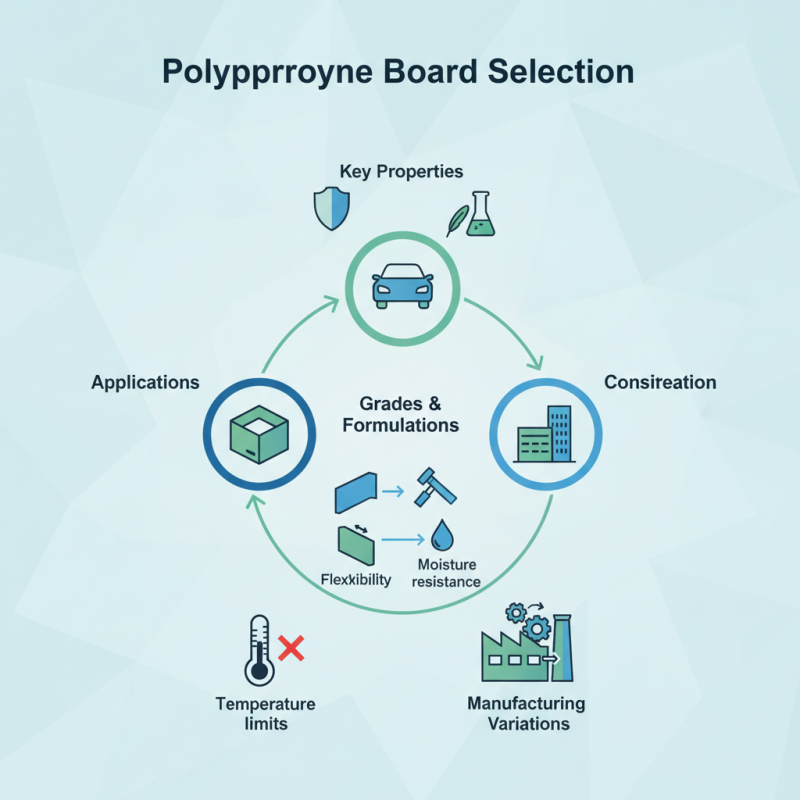
When selecting a Polypropylene Board, consider your specific needs. Different grades and formulations exist, impacting strength and flexibility. For example, some boards are engineered for high-impact resistance while others excel in moisture resistance. Understanding these distinctions is essential for making an informed choice.
It's worth noting that while Polypropylene Boards offer many benefits, there are limitations. They may not perform well in extreme temperatures. Additionally, the production process can vary significantly between manufacturers. Taking these factors into account can avoid potential pitfalls and enhance your project’s success.
Understanding the Basics of Polypropylene Boards
Polypropylene boards are versatile materials employed in various applications. Understanding their composition and properties is crucial before making a choice. Polypropylene, a thermoplastic polymer, is known for its strength and resilience. According to industry reports, the global polypropylene market was valued at approximately $107 billion in 2022. This highlights its widespread use and significance.
When selecting polypropylene boards, pay attention to thickness, density, and chemical resistance. Thicker boards offer enhanced durability and shock resistance. Density impacts weight and strength; higher density typically means better load-bearing capacity. Reports indicate that boards with higher chemical resistance are crucial for specific industrial applications, especially in harsh environments.
Color choices and UV stability are also notable factors. Some industries require specific colors for branding or safety. UV stability is key for outdoor uses, ensuring longevity. While polypropylene boards are robust, they can become brittle under extreme conditions. This aspect invites careful consideration based on usage. Overall, these fundamentals can significantly impact the board's performance in real-world applications, calling for informed decisions.
Assessing the Different Types of Polypropylene Boards
When selecting a polypropylene board, it’s essential to understand the various types available. Polypropylene boards come in different grades, thicknesses, and surface finishes. For instance, some are lightweight yet durable, perfect for signage or packaging. Others offer more rigidity, suitable for structural applications like partitions or displays.
One key factor to consider is the board’s UV resistance. If exposure to sunlight is inevitable, choose a UV-stabilized board. It prolongs the board's life and maintains its color.
Tips: Always check the board’s specifications. Look for details on impact resistance, moisture absorption, and weight tolerance. Do some research before making a purchase.
Another consideration is the board's finish. Smooth surfaces are ideal for printing, while textured finishes may help prevent scratches. Think about the intended application before deciding. This can save you from potential issues later on.
Tips: Experiment with samples before finalizing your choice. Buy small pieces to assess their performance in real-world scenarios. Don’t rush the decision; it may lead to costly mistakes.
Key Factors to Consider When Choosing a Polypropylene Board
When selecting the right polypropylene board, several key factors come into play. Understanding the thickness you require is essential. Thicker boards tend to offer more durability and resistance to impact. This can be a game changer for heavy-duty applications. If you plan to use the board in a high-stress environment, thicker options should be prioritized.
Another important consideration is the finish of the polypropylene board. A smooth finish may be preferable for applications that require easy cleaning or a sleek look. In contrast, a textured surface might provide additional grip or aesthetic appeal. Testing the board’s flexibility is also advisable. A board that’s too rigid may not perform well under certain conditions, leading to potential issues down the line.
Compatibility with specific applications matters as well. Some boards are designed for particular uses, such as signage or packaging. Ensuring that the board meets those needs can help avoid future headaches. Reflect on your requirements carefully. Identifying the right polypropylene board involves a blend of specifications and personal preferences. Your choice can significantly impact the final outcome.
Comparing Thickness and Density for Optimal Performance
When selecting a polypropylene board, thickness and density significantly impact performance. Thicker boards often provide greater resistance to impact and wear. This is essential for applications requiring durability. However, a thicker board may also add weight. Assess the need for lightweight options, especially in portable applications.
Density is another critical factor. Higher density boards typically exhibit improved mechanical properties. They can withstand stress better than lower density alternatives. However, increased density may lead to rigidity, which might not be ideal for certain projects. Consider how flexibility plays into your design requirements.
It’s also vital to understand that not all thickness and density combinations are suitable for every application. Testing and experimentation may reveal unexpected results. For example, a thick but low-density board might not perform well in load-bearing situations. Therefore, it's crucial to weigh the pros and cons based on specific needs and applications. Adjustments might be necessary after initial use, as real-world conditions can differ from expectations.
How to Choose the Best Polypropylene Board for Your Needs? - Comparing Thickness and Density for Optimal Performance
| Board Type | Thickness (mm) | Density (g/cm³) | Application |
| General Purpose | 3 | 0.85 | Packaging, DIY projects |
| High Density | 5 | 1.05 | Structural applications, furniture |
| Lightweight | 2 | 0.65 | Temporary structures, display |
| UV Resistant | 4 | 0.95 | Outdoor applications, signage |
| Antimicrobial | 3 | 0.90 | Medical applications, food packaging |
Applications of Polypropylene Boards in Various Industries
Polypropylene boards are valuable in many industries due to their versatility and durability. In construction, they provide lightweight yet strong solutions for flooring and wall panels. Their resistance to moisture makes them ideal for both indoor and outdoor applications. Many builders prefer them for temporary structures, but their long-term effectiveness sometimes raises questions.
In packaging, polypropylene boards are commonly used for containers and pallets. They offer excellent chemical resistance, making them ideal for food and pharmaceutical products. However, some manufacturers struggle to optimize their designs for specific needs. Balancing strength and flexibility can be challenging. Yet, when done right, they enhance overall efficiency in transportation.
The automative industry also benefits from polypropylene boards. They are used in interior components, like dashboards and door panels. Their lightweight nature contributes to fuel efficiency. Still, there is an ongoing debate about their recyclability. Ensuring that these materials are responsibly reused remains a challenge, prompting further research and refinement within the industry.
Applications of Polypropylene Boards in Various Industries
