How to Choose the Right Industrial Network Switch for Your Needs?
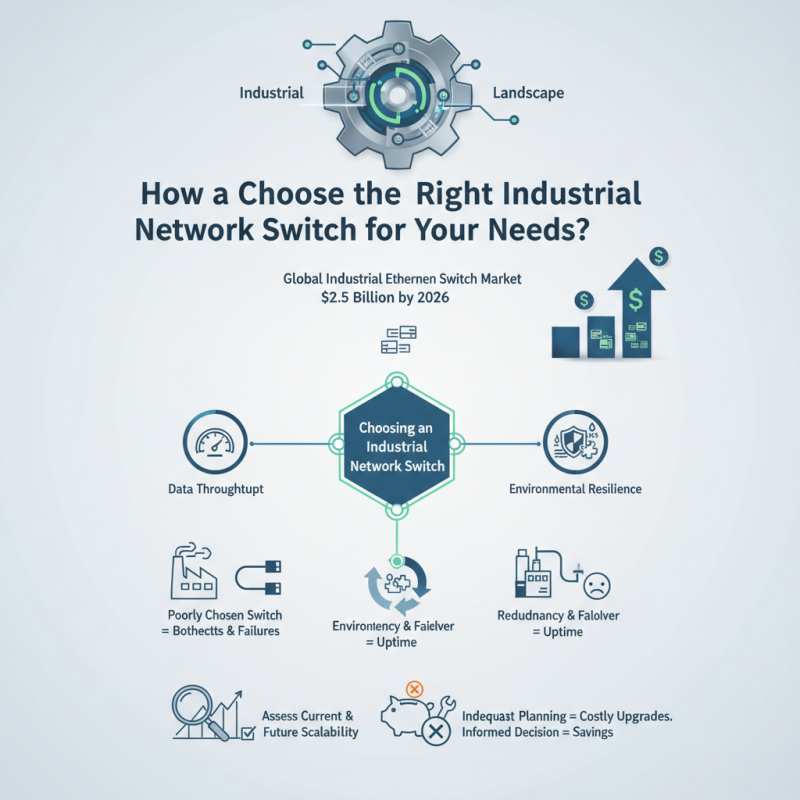
In today's fast-paced industrial landscape, selecting the right industrial network switch is crucial for operational efficiency. According to a recent report by Market Research Future, the global industrial Ethernet switch market is projected to reach $2.5 billion by 2026. This growth underscores the increasing reliance on robust networking solutions in manufacturing and automation.
Choosing an industrial network switch involves careful consideration of various factors, including data throughput, environmental resilience, and compatibility with existing infrastructure. A poorly chosen switch can lead to network bottlenecks or system failures, affecting productivity. Moreover, many businesses underestimate the need for redundancy and failover capabilities, risking downtime in critical operations.
As industries evolve, needs often change. Companies must assess both current demands and future scalability. Inadequate planning can result in costly upgrades down the line, highlighting the importance of informed decision-making when selecting an industrial network switch.
Understanding the Basics of Industrial Network Switches
When selecting industrial network switches, understanding their fundamentals is vital. Industrial network switches differ significantly from standard options. They are designed to withstand harsh environments. These switches often feature enhanced durability, high temperatures, and resistance to moisture.
According to a recent report by MarketsandMarkets, the industrial ethernet switch market is expected to reach $5.7 billion by 2026. This growth indicates a rising demand for reliable connectivity in various sectors. Industries like manufacturing, energy, and transportation require uptime. Hence, choosing a durable switch is crucial. Many overlook the impact of environmental factors. A basic switch may fail in extreme conditions or heavy interference.
Another consideration is the switch's bandwidth capabilities. Research from Allied Market Research states that a substantial percentage of network failures result from insufficient bandwidth. High data volume applications need switches that can handle increased load. Selecting a switch with adequate speed and capacity is key. Many decision-makers might underestimate future network demands. This oversight can lead to costly downtimes later. Balancing current needs and anticipated growth is essential in this selection process.
Industrial Network Switch Types and Their Features
This bar chart illustrates the number of key features associated with different types of industrial network switches, helping you understand which switch might best meet your needs based on functionality.
Key Factors to Consider When Selecting an Industrial Network Switch
Choosing the right industrial network switch involves several critical factors. One key aspect is the switch's operating environment. Many facilities expose equipment to harsh conditions, like extreme temperatures and humidity. Reports indicate that 60% of network failures occur due to environmental factors. This calls for selecting a rugged switch that fits your specific conditions.
Another important factor is bandwidth and speed. Industrial applications often demand high data throughput. Studies show that networks requiring over 100 Mbps can experience performance issues with outdated switches. A suitable switch should support the required speed while ensuring low latency. It's essential to assess your current and future bandwidth needs carefully.
Redundancy and reliability can’t be overlooked. A switch that fails during critical operations can be costly. Research indicates that 74% of network outages happen due to equipment failure. Redundant power supplies and failover capabilities can enhance network uptime. However, many businesses still underestimate the value of these features, leading to increased downtime and lost productivity.
Comparing Different Types of Industrial Network Switches
When choosing an industrial network switch, recognizing the various types available is crucial. Managed switches offer advanced features like VLAN support and remote management. These options enhance control and flexibility for complex networks. They are ideal for large facilities needing oversight on data flows.
Unmanaged switches, on the other hand, are essential for simpler setups. They provide basic connectivity without complicated configurations. These devices are often more affordable but lack advanced features. Reliability is a significant factor, but they may not provide redundancy options critical for certain environments.
Furthermore, there are PoE (Power over Ethernet) switches. These can simplify cabling by delivering power through Ethernet cables. This is beneficial for devices like IP cameras. However, potential power limitations can be a drawback. Each type has its strengths and weaknesses, requiring careful assessment of specific use cases. Ultimately, understanding your unique networking needs is vital for making the right choice.
Evaluating Performance Specifications for Industrial Network Switches
When evaluating performance specifications for industrial network switches, start with data throughput. The switch needs to transmit data efficiently. Look for specifications that detail the bandwidth. Devices in industrial settings often generate a lot of traffic. High bandwidth ensures reliability.
Latency is another critical factor. Low latency means quicker communication across the network. This is essential for real-time applications. If latency is high, it may cause delays. Assess the latency figures provided by manufacturers carefully. Sometimes, these figures may not reflect real-world scenarios.
Power redundancy is equally important. A switch should have the ability to continue operating without interruptions. Consider switches with dual power supply inputs. However, don't overlook potential power issues. Power failures can still impact overall network performance. Evaluate these aspects thoroughly to avoid future complications.
How to Choose the Right Industrial Network Switch for Your Needs? - Evaluating Performance Specifications for Industrial Network Switches
| Specification | Value | Comments |
| Port Count | 8, 16, 24, 48 | Choose based on the number of devices to connect. |
| Switch Type | Managed, Unmanaged, Smart | Managed switches offer more control and features. |
| Speed | 10/100/1000 Mbps | Consider the required speed for your applications. |
| Mounting Type | Rack-mount, Din-rail, Desktop | Choose based on available space and installation requirements. |
| Power over Ethernet (PoE) | Yes, No | Useful for powering devices like IP cameras. |
| Temperature Range | -40°C to 75°C | Ensure switch can operate in your environment. |
| Redundancy Features | Yes, No | Important for high availability applications. |
Assessing Compatibility with Existing Network Infrastructure
When selecting an industrial network switch, compatibility with your existing network infrastructure is crucial. Start by assessing your current devices and their specifications. Check the speed requirements, connection types, and any protocol needs. It's common to overlook these details until issues arise.
Consider the physical layout of your network. Does the new switch need to fit into a specific space? Take note of rack sizes and cooling requirements. If your infrastructure relies heavily on specific cabling types, confirm that the switch can accommodate these without issues. Some switches may not support older cabling standards, leading to unexpected complications.
Reflect on the future. As your network grows, will this switch still meet your needs? A compatible switch today might not be suitable in a year. Anticipating these changes is essential. Avoid the temptation to rush into a purchase. Take your time to evaluate, ensuring that the new equipment will integrate seamlessly into your existing setup.
